
Understanding the True Cost of Private Elementary School
cost of private elementary school

Understanding the True Cost of Private Elementary School

Navigate the complex financial landscape of private elementary education and make informed decisions for your child's future.

Explore Your Options

Key Takeaways

  • ✓ Average private elementary school tuition in the US ranges from $10,000 to $30,000 annually, varying significantly by region and school type.
  • ✓ Tuition is often not the only expense; additional costs can include uniforms, books, technology fees, extracurriculars, and transportation.
  • ✓ Financial aid and scholarships are widely available, with many private schools dedicating substantial funds to make education accessible.
  • ✓ The perceived value of private elementary education often includes smaller class sizes, specialized programs, and tailored learning environments.
  • ✓ Early planning is crucial for budgeting and applying for financial assistance, as deadlines are often well in advance of the school year.

How It Works

1
Research Schools & Understand Base Tuition

Begin by identifying private elementary schools that align with your family's values and educational goals. Obtain their published tuition rates, which serve as your baseline cost.

2
Account for All Additional Fees

Look beyond tuition. Inquire about mandatory fees for application, enrollment, technology, materials, and potential costs for uniforms, field trips, and after-school programs.

3
Explore Financial Aid & Scholarships

Many private schools offer need-based financial aid and merit-based scholarships. Understand the application process, deadlines, and required documentation to maximize your chances.

4
Create a Comprehensive Budget

Consolidate all potential costs – tuition, fees, transportation, lunches, and extracurriculars – and compare them against your family's financial capacity. This holistic view helps in decision-making.

Deconstructing Private Elementary School Tuition

Pink calculator and pen on a pastel green background with copy space. Photo: https://kaboompics.com/ / Pexels
The decision to send a child to a private elementary school is often accompanied by significant financial considerations. At the heart of these considerations lies tuition, which represents the primary and most substantial portion of the cost. However, understanding tuition is not as straightforward as simply looking up a published number. Tuition rates for private elementary schools in the United States exhibit a wide range, influenced by numerous factors such as geographic location, school type, and institutional prestige. For instance, a private elementary school in a major metropolitan area like New York City or Los Angeles will almost invariably have higher tuition than a comparable school in a rural or less expensive urban environment. Similarly, specialized schools, such as those focusing on specific learning styles, religious affiliations, or highly academic curricula, may command different price points. Elite independent schools with extensive facilities and a low student-to-teacher ratio often fall on the higher end of the spectrum, while smaller, community-based or religiously affiliated schools might offer more moderate rates. On average, parents can expect tuition to range anywhere from approximately $10,000 to over $30,000 per year for elementary grades, with some exclusive institutions exceeding this upper limit significantly. It's crucial for prospective parents to obtain the specific tuition schedule directly from each school they are considering, as these figures are subject to annual adjustments and can vary even within the same geographic region. Furthermore, some schools may offer a tiered tuition structure based on grade level, with kindergarten or pre-kindergarten sometimes having different rates than upper elementary grades. Beyond the sticker price, understanding what the tuition covers is equally important. Does it include all books and supplies, or are these additional purchases? Are technology fees, such as for iPads or laptops, embedded, or billed separately? Does the tuition contribute to capital improvements or endowment funds? A thorough inquiry into these details will provide a clearer picture of the actual base financial commitment. Many schools are transparent about these breakdowns, often detailing them on their admissions websites or in informational packets. Parents should not hesitate to ask for a comprehensive list of what is and is not included in the stated tuition to avoid any surprises down the line. This foundational understanding of tuition is the first critical step in assessing the overall investment in private elementary education. It's the anchor point from which all other expenses will be calculated and understood, forming the bedrock of your financial planning for this significant educational choice.

Beyond Tuition: Hidden and Variable Costs

Teacher aids enthusiastic student in classroom setting, enhancing learning experience. Photo: Ahmet Kurt / Pexels
While tuition forms the largest component of the cost of private elementary school, it is by no means the sole financial consideration. Many parents are surprised by the array of additional fees and expenses that can significantly inflate the total annual cost. These 'hidden' or variable costs can range from mandatory charges to optional, but often highly desirable, programmatic elements. One common category includes application and enrollment fees. An application fee, typically non-refundable, is required to process your child's admission application. If accepted, an enrollment deposit or fee is often necessary to secure their spot, which may or may not be credited towards the first tuition payment. These fees can range from a few hundred to over a thousand dollars. Technology fees are increasingly prevalent, covering the cost of school-issued devices, software licenses, and IT support. Similarly, activity fees might cover field trips, special assemblies, or access to certain school resources. Materials fees can encompass textbooks, workbooks, art supplies, and laboratory consumables, which in public schools are typically covered by tax dollars. Uniforms are another significant expense for many private schools. The initial outlay for a complete uniform set, including seasonal variations and specific items for physical education, can be substantial, often hundreds of dollars, with ongoing costs for replacements as children grow or items wear out. Extracurricular activities, while often enriching, usually come with additional charges. Sports teams, music lessons, drama clubs, and academic competitions might require separate fees for coaching, equipment, costumes, or travel. These can add hundreds or even thousands of dollars annually, depending on the child's involvement. Transportation is another variable cost. While some schools offer bus services, these are almost always an additional fee, calculated based on distance or route. For parents who choose to drive, the cost of fuel, vehicle maintenance, and lost time can be considerable. Lunch programs, if not included in tuition, represent a daily or weekly expense. Even if packing lunches, the cost of groceries for specialized diets or preferences can be a factor. Finally, don't overlook the potential for fundraising contributions. While often optional, many private schools rely on donations from their parent community to support programs, facilities, and endowments. While not a direct fee, the expectation of participation can create an additional financial pressure for families. A comprehensive financial plan for private elementary school must meticulously account for all these potential add-ons to present a realistic picture of the total annual expenditure.

Navigating Financial Aid and Scholarship Opportunities
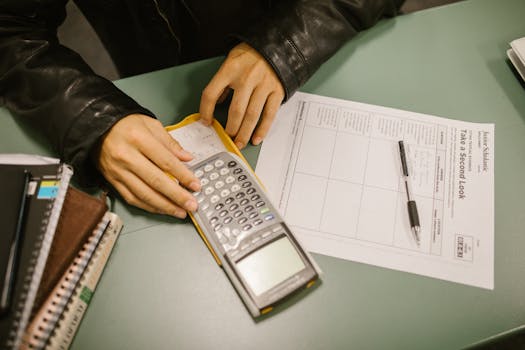
A student covertly uses a cheat sheet hidden in a calculator during an exam. Photo: RDNE Stock project / Pexels
Understanding the cost of private elementary school can be daunting, but it's crucial for families to know that financial assistance is widely available. Many private schools are committed to economic diversity and dedicate substantial portions of their budgets to financial aid programs, making their education accessible to a broader range of families. The most common form of assistance is need-based financial aid, which is determined by a family's demonstrated financial circumstances. Schools typically use standardized assessment tools, such as those provided by the School and Student Service (SSS) by NAIS, to evaluate a family's ability to pay. This process involves submitting detailed financial documents, including tax returns, W-2s, and other income and asset statements. The school then uses this information to calculate an expected family contribution (EFC) and determines the aid amount based on the difference between their tuition and the EFC. It's important to remember that financial aid is not a loan; it's a grant that does not need to be repaid. The amount awarded can vary significantly from partial tuition assistance to nearly full tuition coverage, depending on the family's need and the school's available funds. Beyond need-based aid, some private elementary schools also offer merit-based scholarships. These scholarships are typically awarded to students who demonstrate exceptional academic achievement, artistic talent, athletic prowess, or leadership potential, regardless of their family's financial need. While less common at the elementary level than in high school, it's always worth inquiring about such opportunities. The application process for financial aid usually runs parallel to the admissions process, often with earlier deadlines. Families should start their financial aid applications as soon as possible, gathering all necessary documentation well in advance. Missing deadlines can jeopardize a family's chances of receiving aid. Additionally, transparency and open communication with the school's financial aid office are key. They can provide guidance on the application process, explain specific school policies, and discuss any unique financial circumstances your family may have. Some schools also offer tuition payment plans, allowing families to spread payments over several months rather than in one or two lump sums, which can help manage cash flow. It's also worth investigating external scholarship opportunities from local community organizations, foundations, or religious groups that may support private elementary education. While these are less common, they can provide additional relief. By actively exploring and applying for financial aid and scholarships, families can significantly reduce the net cost of private elementary education, making a seemingly out-of-reach option a viable reality for their child.

Maximizing Value: Tips for Parents Considering Private Elementary

Parents helping daughter with homework in a cozy living room setting. Photo: Annushka Ahuja / Pexels
Choosing a private elementary school is a significant investment, and parents naturally want to ensure they are maximizing the value of that investment. It's not just about the monetary cost, but also about the return on that investment in terms of a child's educational, social, and emotional development. Here are several tips for parents navigating this decision and aiming to maximize the value of their private elementary school experience: * **Align School Mission with Family Values:** Before even considering the financial aspect, ensure the school's philosophy, curriculum, and culture align with your family's values and your child's personality and learning style. A perfect financial fit means little if the educational environment isn't right for your child. * **Look Beyond Rankings:** While rankings can offer a superficial overview, delve deeper. Visit the schools, observe classrooms, talk to current parents, and meet teachers and administrators. A school that might not be top-ranked could be the perfect fit for your child's unique needs, offering immense value. * **Understand the 'Why':** Clearly articulate why you are considering private elementary school over public options. Is it for smaller class sizes, specialized programs, a particular learning philosophy, religious instruction, or a specific community? Knowing your 'why' helps you evaluate if the school truly delivers on those priorities. * **Inquire About Long-Term Planning:** If you have multiple children or plan for them to attend private school through high school, ask about sibling discounts or long-term financial aid strategies. Some schools offer preferential treatment for families with multiple students. * **Leverage School Resources:** Once enrolled, actively participate in school life. Attend parent-teacher conferences, volunteer, join parent associations, and utilize academic support services. The more engaged you are, the more you understand and benefit from the school's offerings. * **Don't Be Afraid to Negotiate (Respectfully):** While direct tuition negotiation is rare, especially for established independent schools, it's always appropriate to discuss your financial situation openly with the financial aid office. If you have received a more favorable offer from a comparable school, respectfully share this information; some schools may be willing to reconsider their aid package, though this is not guaranteed. * **Evaluate All-Inclusive vs. A La Carte:** Compare schools that have an all-inclusive tuition model versus those with many add-on fees. Sometimes, a higher sticker price can actually be more cost-effective if it covers everything from books to extracurriculars. * **Plan for Future Costs:** Remember that tuition often increases annually. Factor in a 3-5% annual increase when planning your long-term budget. Also, consider the cost of potential tutoring, summer programs, or college counseling down the line if applicable. By taking a proactive and holistic approach to evaluating private elementary schools, parents can ensure their significant financial investment translates into exceptional educational and developmental returns for their children.

Comparison

FeaturePrivate Elementary (High Cost)Private Elementary (Mid-Range)Public Elementary
Average Annual Tuition (US)$25,000 - $50,000+$10,000 - $25,000$0 (Tax-funded)
Class SizeVery Small (8-12 students)Small (12-18 students)Larger (20-30+ students)
Specialized ProgramsExtensive & Unique OfferingsGood Range of OfferingsStandardized Curriculum
Teacher-Student RatioVery Low (e.g., 1:6)Low (e.g., 1:10)Higher (e.g., 1:20+)
Financial Aid AvailabilityOften Robust Need-BasedAvailable, Varies by SchoolN/A
Uniforms Required✓ (Often)✓ (Common)✗ (Generally)
Extracurriculars IncludedSome included, many extraSome included, many extraOften free or low cost
Parental InvolvementHigh Expectation/OpportunityHigh Expectation/OpportunityVaries, encouraged

What Readers Say

"The cost of private elementary school initially felt overwhelming, but the financial aid office at our school was incredibly helpful. My son is thriving in a smaller classroom, and the investment feels completely justified for his unique learning style."

Sarah Chen · Boston, MA

"We meticulously budgeted for tuition and the 'hidden' fees. While it's a stretch, the personalized attention and specialized STEM program at their elementary school have truly accelerated our daughter's development."

David Ramirez · Dallas, TX

"After weighing the cost of private elementary school versus public, we opted for private. The result? Our child, who struggled with anxiety in a larger setting, is now confident, engaged, and making incredible academic progress thanks to the supportive environment."

Emily White · Seattle, WA

"The tuition for our elementary school is substantial, and the annual increases are challenging. However, the consistent quality of teachers and the strong community have made it a worthwhile commitment for our family, despite the financial strain."

Mark Johnson · Chicago, IL

"Coming from a public school system that couldn't accommodate our son's gifted needs, the cost of private elementary school was an investment in his future. He's challenged daily, intellectually stimulated, and genuinely loves going to school, which is priceless."

Jessica Lee · Atlanta, GA

Frequently Asked Questions

What is the average cost of private elementary school in the US?

The average cost of private elementary school in the US typically ranges from $10,000 to $30,000 per year. However, this figure can vary significantly based on location, school type (e.g., religious, independent, specialized), and the school's reputation, with some elite institutions exceeding $50,000 annually.

Are there financial aid options for private elementary school?

Yes, most private elementary schools offer need-based financial aid to eligible families, and some also provide merit-based scholarships. It's highly recommended to apply for financial aid during the admissions process, as it can significantly reduce the overall cost and make private education more accessible.

How can I budget for the total cost of private elementary school?

To budget effectively, start by identifying the base tuition. Then, meticulously account for all additional fees, including application, enrollment, technology, uniforms, books, transportation, lunch programs, and extracurricular activities. Create a comprehensive spreadsheet to track all potential expenses and factor in potential annual tuition increases.

Is the high cost of private elementary school worth it?

The 'worth' of private elementary school is subjective and depends on individual family priorities and a child's needs. Many families find the investment valuable for benefits like smaller class sizes, specialized curricula, dedicated teachers, strong community, and tailored learning environments that may not be available in public schools.

How does the cost of private elementary school compare to public school?

Public elementary schools are funded by taxes and generally do not charge tuition, making their direct cost to parents significantly lower. Private elementary schools, conversely, charge tuition and various fees. While public schools may have some activity fees, the overall financial outlay for private education is substantially higher.

Who should consider paying the cost of private elementary school?

Families who prioritize specific educational philosophies, smaller class sizes, specialized academic or extracurricular programs, religious instruction, or a particular school culture often consider private elementary school. It's also a strong consideration for children with unique learning needs that may be better met in a private setting.

Are there any risks associated with the high cost of private elementary school?

The primary risk is financial strain if not properly budgeted for, potentially impacting other family goals like retirement savings or college funds for older children. There's also the risk that a chosen school may not be the perfect fit for a child, despite the significant investment, making thorough research crucial.

How might the cost of private elementary school evolve in the future?

The cost of private elementary school is generally expected to continue its upward trend, driven by rising operational expenses, faculty salaries, and facility maintenance. However, many schools are also increasing their financial aid endowments and exploring innovative funding models to maintain accessibility and attract diverse student bodies.

Navigating the cost of private elementary school can be complex, but with thorough research, proactive financial planning, and an understanding of available aid, you can make an informed decision. Empower your child's educational journey by exploring all your options today.

Topics: cost of private elementary schoolprivate school tuition USelementary education expensesprivate school financial aidvalue of private elementary
Leo List

DK Escorts LU Escorts AT Escorts SE Escorts FI Escorts CH Escorts DE Escorts HR Escorts IE Escorts GR Escorts CZ Escorts NO Escorts BE Escorts FR Escorts SI Escorts IL Escorts NL Escorts PL Escorts HU Escorts ES Escorts IT Escorts PT Escorts SK Escorts RO Escorts ZA Escorts UY Escorts US Escorts UK Escorts NZ Escorts AU Escorts
Brampton weed
Adultwork EstrelaBet Vai de Bet R7 Bet Betão Galera Bet Rainbet Bet9ja Shop SportyBet BetKing Sisal Loto Foot Hollywoodbets YesPlay Odibets RushBet Jugabet BetWarrior BetCity MSport betPawa Fortebet