
Online Degree Programs in Psychology: Your Ultimate Guide
Gain expertise and build a fulfilling career in psychology from the comfort of your home, on your schedule.
Explore Programs NowKey Takeaways
- ✓ Over 70% of psychology students pursue careers outside of clinical practice, leveraging their skills in diverse fields.
- ✓ Many online psychology programs offer accelerated tracks, allowing completion in less time than traditional formats.
- ✓ Accreditation is crucial; ensure your chosen program is recognized by the APA or a regional accrediting body.
- ✓ Online degrees often provide more flexibility, making them ideal for working professionals or those with family commitments.
How It Works
Determine your career aspirations in psychology, whether it's counseling, research, or organizational psychology. This will help you choose the right degree level and specialization.
Seek out universities offering online psychology degrees with proper accreditation. Verify their curriculum, faculty, and student support services to ensure quality.
Complete the application process, submit required documents, and secure your admission. Familiarize yourself with the online learning platform and course structure before classes begin.
Actively participate in online discussions, complete assignments diligently, and utilize available resources like virtual tutoring. Build a strong network with peers and professors.
Why Choose Online Psychology Degrees?
 Photo: Czapp Árpád / Pexels
Navigating Accreditation and Program Quality for Virtual Psychology Education
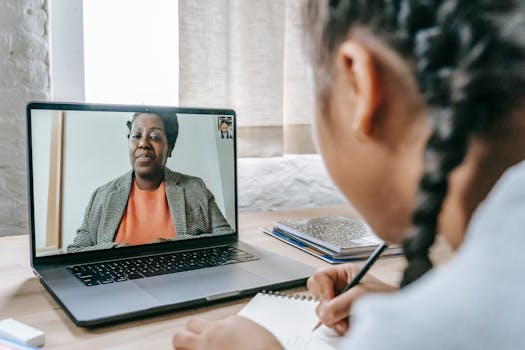 Photo: Katerina Holmes / Pexels
Career Pathways and Specializations with Online Psychology Qualifications
 Photo: Pavel Danilyuk / Pexels
Maximizing Your Success in Online Psychology Programs: Tips and Common Mistakes
 Photo: Yan Krukau / Pexels
Comparison
| Feature | Accredited Online Program | Non-Accredited Online Program | Traditional Campus Program |
|---|---|---|---|
| Flexibility | High (asynchronous options) | High (often less structured) | Low (fixed schedules) |
| Recognition by Employers/Boards | High (widely accepted) | Low (often not accepted) | High (universally accepted) |
| Access to Resources | Excellent (virtual libraries, tech support) | Variable (often limited) | Excellent (physical and virtual) |
| Networking Opportunities | Good (virtual communities, alumni) | Poor (limited structure) | Excellent (campus events, clubs) |
| Cost (Tuition & Fees) | Moderate to High (competitive) | Often Low (but high risk) | Moderate to High (plus living costs) |
| APA/CACREP Alignment | ✓ (for relevant degrees) | ✗ (unlikely) | ✓ (for relevant degrees) |
What Readers Say
"The online degree programs in psychology offered me the flexibility I desperately needed as a full-time working mom. The curriculum was rigorous, and the professors were incredibly supportive, always available for questions. I'm now pursuing my master's with confidence."
Sarah J. · Austin, TX"I was skeptical about online learning, but this psychology program exceeded all my expectations. The interactive modules and discussion boards fostered a strong sense of community, making me feel connected despite the distance. It truly prepared me for my HR role."
Michael R. · Seattle, WA"Completing my Psy.D. in clinical psychology online allowed me to maintain my practice while pursuing advanced education. The program's blend of theoretical depth and practical application was outstanding, directly impacting my ability to serve my clients better. A truly transformative experience."
Dr. Emily Chen · Boston, MA"The online psychology bachelor's program was largely excellent, though I sometimes missed the spontaneous interactions of a physical classroom. However, the quality of instruction and accessibility of resources made up for it, providing a solid foundation for my career in social services."
David L. · Phoenix, AZ"As an international student, finding quality online degree programs in psychology was crucial. This program not only offered a world-class education but also incredible support for navigating the online environment. I've since moved back home and am applying my knowledge effectively."
Maria G. · Miami, FLFrequently Asked Questions
Are online psychology degrees as respected as traditional ones?
Yes, if the online program is from an accredited institution and holds the necessary programmatic accreditations (like APA for doctoral degrees), it is generally as respected as a traditional degree. Employers and licensing boards prioritize accreditation and the quality of education, not the delivery format.
Can I become a licensed therapist with an online psychology degree?
Yes, but this typically requires a master's or doctoral degree from an accredited program, followed by supervised clinical experience and passing state licensure exams. Ensure your chosen online program meets your state's specific licensure requirements, especially for practicum or internship components.
How do I choose the best online psychology program for me?
Start by identifying your career goals and the degree level required. Then, research accredited universities offering programs that align with your interests. Compare curriculum, faculty expertise, student support services, program flexibility, and cost. Read reviews and speak to admissions counselors.
What is the typical cost of online psychology degree programs?
Costs vary widely based on the university, degree level, and state residency. Online programs can range from $300 to over $1,000 per credit hour. While you might save on commuting and housing, factor in technology fees and textbooks. Financial aid and scholarships are often available.
Are there any disadvantages to pursuing an online psychology degree?
Potential disadvantages include a lack of face-to-face interaction, which some students prefer, and the need for strong self-discipline and time management. Technical issues can also arise. However, many modern online programs mitigate these with robust interactive platforms and support systems.
Who should consider online degree programs in psychology?
Online psychology programs are ideal for working professionals, parents, military personnel, individuals in remote areas, or anyone who needs flexibility in their education. They suit self-motivated learners who are comfortable with technology and can manage their time effectively.
How do online psychology programs handle practical experience requirements?
For programs requiring practical experience (like master's or doctoral degrees for licensure), online universities typically assist students in finding approved practicum or internship sites in their local communities. Some may also offer virtual simulations or hybrid components.
What technological requirements are needed for online psychology studies?
Generally, you'll need a reliable computer with a stable internet connection, a webcam, and a microphone for virtual meetings. Familiarity with common office software and learning management systems (like Canvas or Blackboard) is also beneficial. Some programs may have specific software requirements.
Embark on a transformative educational journey with online degree programs in psychology. Whether you're starting fresh or advancing your career, the flexibility and quality of these programs can unlock your full potential. Explore your options today and take the first step towards a rewarding future in understanding the human mind.