✓ AI will personalize learning paths for every student, adapting to individual needs and paces.
✓ Virtual and Augmented Reality (VR/AR) will create immersive, experiential learning environments.
✓ Blockchain technology will secure academic credentials and streamline record-keeping.
✓ Data analytics will provide real-time insights into student progress, informing teaching strategies.
✓ Gamification will increase student engagement and motivation through interactive challenges and rewards.
How It Works
1
Personalized AI Pathways
AI algorithms analyze student performance, learning styles, and interests to generate custom curricula. This ensures each student receives content and challenges perfectly suited to their development.
2
Immersive VR/AR Classrooms
Students don VR headsets to explore historical sites, dissect virtual organisms, or conduct complex science experiments. AR overlays digital information onto the real world, enhancing hands-on activities.
3
Adaptive Assessment & Feedback
Technology continuously assesses understanding through interactive exercises, quizzes, and projects. Instant, constructive feedback helps students correct misconceptions and solidify knowledge in real-time.
4
Global Collaboration & Access
Cloud-based platforms connect students and educators worldwide, fostering collaborative projects and diverse perspectives. This expands access to quality education regardless of geographical location.
The Dawn of Personalized Learning with AI in Education
Photo: Pavel Danilyuk / Pexels
The future of education technology is inextricably linked to the advancements in Artificial Intelligence (AI). We are moving beyond one-size-fits-all instruction to an era where every student's learning journey is uniquely crafted. AI will serve as the ultimate teaching assistant, capable of understanding individual learning styles, identifying knowledge gaps, and recommending tailored resources. Imagine a system that, upon recognizing a student struggles with algebraic concepts, instantly provides supplementary interactive tutorials, practice problems, and even connects them with an AI-powered tutor for real-time assistance. This isn't science fiction; it's the near future. Adaptive learning platforms, powered by sophisticated AI, will continuously analyze student performance data, not just on tests, but through their interactions with digital content, their engagement levels, and even their emotional responses (via sentiment analysis, where permissible and ethical). This rich data allows the AI to adjust the pace, difficulty, and presentation format of material, ensuring optimal comprehension and retention. For instance, if a student learns best through visual aids, the AI will prioritize videos and infographics; if they prefer hands-on application, it will suggest simulations and interactive labs. This level of personalization promises to unlock the full potential of every learner, addressing the diverse needs present in any classroom, from gifted students seeking advanced challenges to those requiring additional support. The role of the human educator will evolve from primary information deliverer to facilitator, mentor, and guide, leveraging AI insights to provide targeted interventions and foster critical thinking skills. This symbiotic relationship between AI and human intelligence will redefine effective pedagogy, making learning more efficient, engaging, and equitable. Furthermore, AI can automate mundane administrative tasks, freeing up valuable teacher time to focus on what matters most: connecting with students and inspiring them. The impact of AI on education will be profound, fundamentally altering how we teach and learn, pushing the boundaries of what's possible in academic achievement and preparing students for a rapidly changing world.
Immersive Experiences: Virtual and Augmented Reality Revolutionize Classrooms
Photo: Norma Mortenson / Pexels
Beyond passive consumption of content, the future of education technology embraces immersive experiences through Virtual Reality (VR) and Augmented Reality (AR). These technologies are poised to transform theoretical concepts into tangible, unforgettable learning adventures. Imagine high school history students not just reading about Ancient Rome, but walking through a meticulously reconstructed Coliseum, witnessing gladiatorial contests, or interacting with historical figures in a VR environment. Science classes could conduct complex and dangerous experiments in a virtual lab without any risk, dissecting virtual organs with haptic feedback, or exploring the molecular structure of compounds in 3D. Medical students could practice intricate surgical procedures on realistic avatars, gaining invaluable experience before ever touching a real patient. AR, on the other hand, overlays digital information onto the real world, enhancing traditional learning environments. Students could point their tablet at a textbook diagram of the human heart, and a 3D animated model would appear on their screen, showing blood flow in real-time. Field trips could be enhanced with AR overlays providing contextual information about landmarks, flora, and fauna. This removes geographical and logistical barriers, making experiences accessible to all students, regardless of their location or socioeconomic background. The benefits extend beyond engagement; studies show that experiential learning through VR/AR leads to higher retention rates and deeper understanding. It fosters spatial reasoning, problem-solving skills, and empathy, as students can virtually step into different roles or perspectives. Accessibility is also a key advantage; students with physical limitations might struggle with traditional lab work, but VR/AR offers an inclusive alternative. The initial investment in VR/AR hardware might seem significant, but as technology advances and becomes more widespread, costs are expected to decrease, making these powerful tools more accessible to a broader range of educational institutions. The integration of VR/AR into curricula will require thoughtful planning and teacher training, but the potential for creating truly transformative and engaging learning environments is immense, paving the way for a generation of learners who experience education rather than just consume it.
Blockchain, Data Analytics, and Gamification: The EdTech Ecosystem
Photo: RDNE Stock project / Pexels
The future of education technology isn't just about AI and immersive realities; it's about building a robust and interconnected ecosystem that leverages various cutting-edge innovations. Blockchain technology, often associated with cryptocurrencies, holds immense promise for securing academic records, transcripts, and certifications. Imagine a world where your academic achievements are stored on an immutable, decentralized ledger, instantly verifiable by employers or other educational institutions, eliminating fraud and streamlining administrative processes. This not only increases trust but also empowers individuals with greater control over their educational data. Parallel to this, the power of data analytics will become indispensable. Every interaction a student has with digital learning platforms generates data. Advanced analytics will move beyond simple performance tracking to provide granular insights into learning patterns, engagement levels, and even predictors of success or potential struggle. Educators can then use these real-time dashboards to identify at-risk students, tailor interventions, and refine teaching methodologies proactively, moving from reactive to predictive education. This data-driven approach will lead to more effective resource allocation and personalized support. Furthermore, gamification will become a central pillar of engaging learning experiences. By integrating game-like elements such as points, badges, leaderboards, quests, and rewards into educational content, learning becomes more intrinsically motivating. This taps into students' natural desire for achievement and competition, transforming mundane tasks into exciting challenges. Gamified learning environments encourage persistent effort, problem-solving, and collaboration, making the learning process enjoyable and sticky. Imagine a history class where students embark on a 'quest' to uncover ancient civilizations, earning 'artifacts' for correctly answering questions and collaborating with classmates to solve historical puzzles. These elements, combined with AI-driven personalization and VR/AR immersion, create a dynamic and highly effective learning environment. The synergy between these technologies — blockchain ensuring integrity, data analytics providing insights, and gamification driving engagement — forms a comprehensive framework for the future of education. Understanding the holistic approach to education will be key to successful implementation.
Navigating the Future: Tips for Educators and Institutions
Photo: Kampus Production / Pexels
Embracing the future of education technology requires strategic planning and a proactive mindset from both educators and institutions. It's not merely about adopting new tools, but about fundamentally rethinking pedagogical approaches and institutional structures. Here are some key tips and common pitfalls to avoid:
**Tips for Educators:**
* **Embrace Continuous Learning:** Technology evolves rapidly. Stay curious, participate in professional development, and experiment with new tools. Your comfort with technology directly impacts student adoption.
* **Focus on Pedagogy First:** Technology is a tool, not a solution in itself. Understand how a specific technology can enhance learning outcomes before implementing it. How does it support deeper understanding, critical thinking, or collaboration?
* **Become a Facilitator:** Your role shifts from lecturer to guide. Encourage student-led exploration, problem-solving, and collaborative learning using technological resources.
* **Master Data Interpretation:** Learn to analyze the data provided by adaptive learning platforms to inform your teaching strategies and identify individual student needs.
* **Promote Digital Citizenship:** Teach students not just how to use technology, but how to use it responsibly, ethically, and safely, fostering critical evaluation of online information.
**Common Mistakes to Avoid for Institutions:**
* **Purchasing Tech Without Purpose:** Don't invest in shiny new gadgets without a clear educational goal and a plan for integration into the curriculum.
* **Insufficient Teacher Training:** Provide comprehensive, ongoing training and support for educators. Technology adoption fails without adequate professional development.
* **Ignoring Infrastructure:** Ensure robust internet connectivity, adequate device access, and IT support. A lack of reliable infrastructure cripples even the best edtech initiatives.
* **One-Size-Fits-All Implementation:** Recognize that different departments, grade levels, and student populations may require varied technological approaches. Flexibility is key.
* **Neglecting Digital Equity:** Address the digital divide. Ensure all students have equitable access to devices, internet, and the skills needed to leverage educational technology effectively, both in school and at home.
By focusing on these strategies, educators and institutions can effectively harness the power of future education technology to create dynamic, engaging, and equitable learning environments.
Comparison
Feature
AI-Driven Adaptive Platform
Traditional LMS (with some tech)
VR/AR Immersive Labs
Personalization
Highly individualized learning paths
Limited, mostly static content
Experiential, but not inherently adaptive
Engagement Level
High, gamified, immediate feedback
Moderate, text/video based
Extremely high, hands-on
Assessment Type
Continuous, formative, predictive
Summative, periodic quizzes/tests
Performance-based, skill demonstration
Teacher Role
Facilitator, data analyst, mentor
Content deliverer, grader
Curator of experiences, technical support
Accessibility
High, cloud-based, diverse formats
Moderate, requires internet/device
Requires specialized hardware
Cost (Implementation)
Medium-High (software licenses)
Low-Medium (existing infrastructure)
High (hardware + content development)
What Readers Say
★★★★★
"The insights from AI-powered learning platforms have completely transformed how I approach lesson planning. I can now pinpoint exactly where students are struggling and provide targeted interventions, which was impossible before. It's truly the future of education technology in action."
Dr. Eleanor Vance · Palo Alto, CA
★★★★★
"My students are absolutely captivated by the VR history lessons. They 'visited' ancient Rome last week, and their retention of facts and understanding of the culture was phenomenal. This kind of immersive learning is a game-changer for engagement."
Marcus Chen · Austin, TX
★★★★★
"Implementing blockchain for student credentials has significantly reduced administrative burden and increased security. What used to take weeks now takes minutes, and parents and students appreciate the transparency. Our institution is much more efficient."
Sarah Jenkins · Boston, MA
★★★★★
"While the initial setup for our new adaptive learning system was complex, the long-term benefits are clear. Student performance has noticeably improved, particularly for those who previously felt left behind. We're still refining our integration, but the potential is undeniable."
David Rodriguez · Denver, CO
★★★★★
"As a homeschool parent, the access to high-quality, personalized online learning tools has been revolutionary. My child receives an education tailored to their pace and interests, something traditional schooling couldn't offer to this extent. It's democratizing education."
Jessica Lee · Miami, FL
Frequently Asked Questions
What is the biggest driver of the future of education technology?
The biggest driver is the increasing demand for personalized learning experiences coupled with rapid advancements in Artificial Intelligence (AI). AI allows for highly adaptive content, tailored feedback, and automated administrative tasks, freeing educators to focus on higher-level instruction and student mentorship. It addresses the diverse needs of learners in a way traditional methods cannot.
Will technology replace human teachers in the future?
No, technology is unlikely to replace human teachers. Instead, it will augment their capabilities, transforming the teacher's role from a primary information dispenser to a facilitator, mentor, and guide. Technology will handle routine tasks and data analysis, allowing teachers to focus on fostering critical thinking, creativity, socio-emotional development, and providing personalized human connection that AI cannot replicate.
How can schools prepare for the integration of new education technologies?
Schools should prepare by investing in robust digital infrastructure (reliable internet, adequate devices), providing comprehensive and ongoing professional development for educators, and developing clear pedagogical strategies for integrating technology into the curriculum. It's crucial to foster a culture of innovation and address digital equity to ensure all students benefit.
Is the future of education technology too expensive for most schools?
While some cutting-edge technologies like advanced VR setups can be costly, many impactful edtech solutions, especially cloud-based AI and adaptive learning platforms, are becoming increasingly accessible and affordable. Furthermore, the long-term benefits in student outcomes and operational efficiency can often justify the investment. Grant opportunities and strategic phased implementation can also help manage costs.
How does the future of education technology compare to traditional learning methods?
The future of education technology offers significant advantages over traditional methods by providing unparalleled personalization, immediate feedback, immersive experiences (VR/AR), and data-driven insights. While traditional methods rely on a more standardized approach, edtech aims to optimize learning for each individual, making education more engaging, effective, and equitable. It's a shift from passive consumption to active, personalized engagement.
Who stands to benefit most from the future of education technology?
Ultimately, students stand to benefit most, as they will receive a more engaging, personalized, and effective education tailored to their unique needs and learning styles. Educators will also benefit from enhanced tools and freed-up time. Institutions can achieve greater efficiency and better outcomes, while society as a whole benefits from a more skilled and adaptable workforce prepared for the demands of the future.
What are the potential risks or ethical concerns with advanced edtech?
Potential risks include data privacy and security concerns, algorithmic bias in AI systems, the digital divide exacerbating inequalities, and the potential for over-reliance on technology leading to reduced human interaction or critical thinking skills. Ethical considerations like informed consent for data collection and transparency in AI decision-making are paramount and must be addressed through careful policy and design.
What emerging technologies will shape education beyond AI and VR?
Beyond AI and VR, emerging technologies like blockchain for secure credentials, haptic feedback for tactile learning, brain-computer interfaces for enhanced focus, and even quantum computing for ultra-complex simulations could further shape education. The integration of 5G and ubiquitous computing will also enable seamless, real-time access to these advanced learning environments from anywhere.
The future of education technology is not a distant dream; it's unfolding now. By embracing these innovations, we can create a more dynamic, equitable, and effective learning landscape for every student. Explore how these advancements can transform your educational journey or institution today.

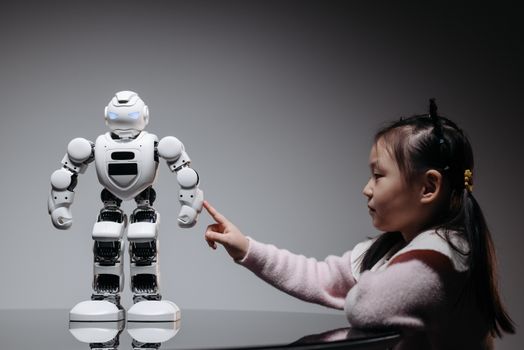 Photo: Pavel Danilyuk / Pexels
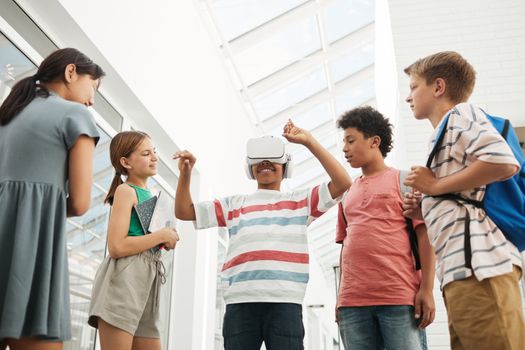 Photo: Norma Mortenson / Pexels
 Photo: RDNE Stock project / Pexels
 Photo: Kampus Production / Pexels