The Future of Education Technology Trends: Shaping Learning
future of education technology trends

The Future of Education Technology Trends: Shaping Learning

Uncover how cutting-edge technologies are revolutionizing learning environments and empowering students and educators across the US.

Explore the Future

Key Takeaways

  • ✓ AI and machine learning are personalizing learning at unprecedented scales.
  • ✓ Virtual and Augmented Reality are creating immersive educational experiences.
  • ✓ Data analytics is providing insights to optimize teaching strategies and student outcomes.
  • ✓ Remote and hybrid learning models are becoming permanent fixtures, driven by technology.

How It Works

1
Identify Learning Gaps

AI-powered diagnostics analyze student performance data to pinpoint specific areas where individuals struggle. This allows for targeted intervention and resource allocation.

2
Deliver Personalized Content

Adaptive learning platforms use these insights to curate and deliver tailored educational materials, exercises, and challenges. Content adjusts in difficulty and style based on real-time progress.

3
Foster Immersive Engagement

VR/AR technologies transport students into historical events, scientific phenomena, or virtual labs. This hands-on, experiential learning significantly boosts engagement and retention.

4
Enable Collaborative & Flexible Learning

Cloud-based tools, video conferencing, and digital whiteboards facilitate seamless collaboration regardless of physical location. This supports diverse learning styles and schedules, making education more accessible.

The Rise of Artificial Intelligence and Adaptive Learning
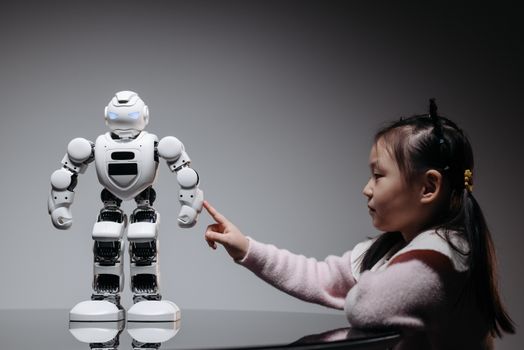
A young girl engaging with a robotic toy, highlighting curiosity and innovation. Photo: Pavel Danilyuk / Pexels
The landscape of education is undergoing a profound transformation, with Artificial Intelligence (AI) and machine learning leading the charge in shaping the future of education technology trends. No longer confined to science fiction, AI is now a practical tool, revolutionizing how students learn and how educators teach. At its core, AI's power in education lies in its ability to personalize the learning experience on an unprecedented scale. Imagine a classroom where every student receives instruction perfectly tailored to their individual needs, pace, and learning style – this is the promise of AI-driven adaptive learning platforms. These sophisticated systems analyze vast amounts of student data, from test scores and homework submissions to engagement levels and even eye-tracking patterns. With this information, they can identify specific knowledge gaps, predict areas where a student might struggle, and then dynamically adjust the curriculum to provide targeted support. For instance, if a student consistently misunderstands a particular mathematical concept, the AI can present alternative explanations, supplementary exercises, or even connect them with relevant online resources, all without direct teacher intervention. This level of individualized attention was once the exclusive domain of expensive private tutoring, but AI makes it scalable and accessible to a much broader population. Beyond personalization, AI is also enhancing the administrative aspects of education. AI-powered tools can automate grading of objective assignments, provide instant feedback to students, and even help educators design more effective lesson plans by highlighting common misconceptions across a class. This frees up valuable teacher time, allowing them to focus on higher-order tasks like critical thinking development, emotional support, and fostering creativity. Furthermore, AI is proving invaluable in addressing learning disabilities or diverse learning needs. By identifying patterns that might indicate a specific learning challenge, AI can prompt educators to investigate further and implement appropriate accommodations, ensuring that every student has the opportunity to succeed. The integration of AI is not about replacing teachers, but empowering them with data-driven insights and tools to create a more effective, equitable, and engaging educational environment for all.

Immersive Experiences: Virtual and Augmented Reality in Classrooms
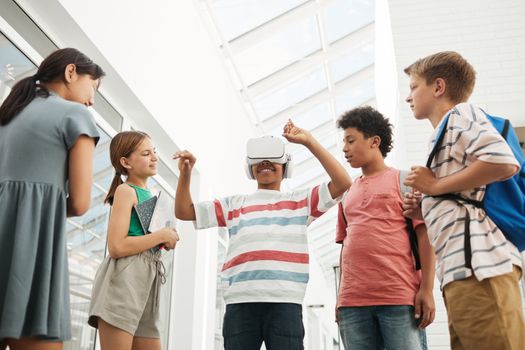
A group of diverse children immersed in virtual reality technology indoors. Photo: Norma Mortenson / Pexels
Among the most exciting future of education technology trends is the burgeoning application of Virtual Reality (VR) and Augmented Reality (AR) within educational settings. These immersive technologies are fundamentally changing how students interact with learning content, transforming passive consumption into active, experiential engagement. VR, with its ability to transport users into entirely simulated environments, offers unparalleled opportunities for exploration and hands-on learning that would otherwise be impossible or prohibitively expensive. Imagine high school biology students dissecting a virtual frog without the need for physical specimens, or history students walking through ancient Roman streets, interacting with digital inhabitants and witnessing historical events firsthand. Medical students can perform complex surgeries in a risk-free virtual operating room, while engineering students can design and test prototypes in a simulated environment before committing to physical construction. The tactile and visual nature of VR learning significantly improves retention and understanding, making abstract concepts concrete and distant realities immediate. AR, on the other hand, overlays digital information onto the real world, enhancing our perception of our physical surroundings. This technology can turn an ordinary classroom into an interactive learning space. Students can point their tablets at a textbook image of the human heart, for example, and an animated 3D model appears, allowing them to rotate it, zoom in, and see its internal workings. In a science class, AR apps can project chemical structures onto a desk, allowing students to manipulate them with their hands and understand molecular bonds. For field trips, AR can provide historical context or geographical data directly on-site, enriching the experience without disrupting the natural environment. Both VR and AR are also proving valuable for vocational training, allowing learners to practice dangerous or complex tasks in a safe, controlled environment. From welding simulations to complex machinery operation, these technologies bridge the gap between theoretical knowledge and practical application, ensuring graduates are job-ready. While challenges like cost and accessibility remain, the rapid development and decreasing price points of VR/AR hardware suggest that these immersive tools will become increasingly commonplace in the classrooms of tomorrow, making learning more engaging, memorable, and effective.

The Evolution of Remote and Hybrid Learning Models

A schoolgirl in a classroom wearing a face mask, symbolizing new normal education. Photo: Max Fischer / Pexels
The COVID-19 pandemic undeniably accelerated the adoption of remote and hybrid learning, pushing what were once niche educational approaches into the mainstream. However, looking at the future of education technology trends, it's clear that these models are not merely temporary fixes but represent a permanent evolution in how education is delivered and consumed. The technological infrastructure developed and refined during the pandemic, including robust video conferencing platforms, cloud-based collaboration tools, and advanced learning management systems (LMS), has laid the groundwork for more flexible and resilient educational ecosystems. Remote learning, now often referred to as online learning, has moved beyond simple video lectures. Modern online platforms incorporate interactive elements, virtual breakout rooms for group work, sophisticated assessment tools, and AI-powered tutors, creating a rich and engaging experience that can rival or even surpass traditional in-person instruction for certain subjects and learners. This flexibility is a game-changer for adult learners, working professionals, and individuals in remote areas who previously faced significant barriers to accessing quality education. Hybrid learning, which blends elements of both in-person and online instruction, is emerging as a particularly potent model. It allows institutions to leverage the best of both worlds: the immediate feedback and social interaction of face-to-face learning, combined with the flexibility, personalized pace, and resource richness of online environments. For example, students might attend lectures online at their convenience and then come to campus for hands-on lab work, group projects, or one-on-one consultations with instructors. This model maximizes efficiency and caters to diverse student needs, promoting a more inclusive educational experience. The continued development of seamless digital tools for communication, content delivery, and assessment will only strengthen these models. Furthermore, the focus is shifting towards creating 'digital equity,' ensuring that all students, regardless of socioeconomic background, have access to the necessary devices and internet connectivity to participate fully in these evolving learning environments. The long-term impact will be a more accessible, flexible, and student-centered educational system, capable of adapting to future challenges and catering to a globalized learning community.

Leveraging Data Analytics and Cybersecurity in EdTech

An empty computer lab with multiple workstations and large windows during the daytime. Photo: Polina Zimmerman / Pexels
As education technology trends advance, the role of data analytics and cybersecurity becomes increasingly critical. Data analytics in education, often referred to as learning analytics, involves collecting, analyzing, and reporting data about learners and their contexts to understand and optimize learning and the environments in which it occurs. For educators, this means gaining unprecedented insights into student performance, engagement patterns, and learning styles. Dashboards can provide real-time data on individual student progress, highlighting who might be falling behind or excelling, allowing teachers to intervene proactively and tailor their instruction more effectively. Institutions can use aggregated data to identify areas where curriculum might need improvement, assess the effectiveness of teaching methodologies, and even predict student retention rates. This data-driven approach moves education beyond intuition, grounding decisions in empirical evidence to foster continuous improvement. However, with the increased collection of student data comes a heightened responsibility for cybersecurity. Educational institutions collect sensitive personal information, academic records, and behavioral data, making them attractive targets for cyberattacks. The future of edtech demands robust cybersecurity frameworks to protect this invaluable information. This includes implementing strong encryption protocols, multi-factor authentication for access, regular security audits, and comprehensive data privacy policies that comply with regulations like FERPA in the US. Training for both educators and students on digital citizenship and online safety is also paramount. Without strong cybersecurity measures, the benefits of data analytics in education could be undermined by privacy breaches and a loss of trust. Therefore, the successful integration of advanced edtech relies heavily on a parallel commitment to safeguarding the digital integrity and privacy of all stakeholders. Prioritizing both data-driven insights for learning optimization and stringent cybersecurity protocols is essential for a safe, effective, and ethical educational future.

Comparison

FeatureAI-Powered Adaptive LearningVR/AR Immersive ToolsTraditional Classroom
PersonalizationHighly CustomizedContextual ImmersionLimited, Teacher-Dependent
Engagement LevelHigh, DynamicVery High, ExperientialVariable, Passive
AccessibilityHigh (online access)Medium (hardware dependent)Geographically Limited
Cost of Implementation
Feedback SpeedInstantReal-time SimulationDelayed, Manual

What Readers Say

"Our district implemented an AI-driven math platform, and the results for the future of education technology trends have been phenomenal. Student engagement in math has soared, and we're seeing much better retention of difficult concepts. It truly personalizes learning at scale."

Dr. Elena Rodriguez · Austin, TX

"As a science teacher, using VR for virtual lab experiments has been a game-changer. Students can conduct complex procedures without safety risks or material costs, making the future of education technology trends exciting and accessible. They absolutely love it!"

Mark Chen · Seattle, WA

"The shift to a hybrid learning model, powered by advanced edtech, has allowed our university to reach a broader student base. We've seen a 15% increase in enrollment from non-traditional students, proving the value of these future of education technology trends."

Sarah Miller · Boston, MA

"While the initial investment in new edtech can be substantial, the long-term benefits for student outcomes and teacher efficiency are clear. We're still navigating some integration challenges, but the potential of these future of education technology trends is undeniable."

Prof. David Kim · Chicago, IL

"My son, who struggles with traditional classroom settings, has thrived with the personalized learning paths offered by new educational technologies. He's more engaged and confident, which is exactly what we hoped for from the future of education technology trends."

Jessica Lee · Los Angeles, CA

Frequently Asked Questions

What are the most impactful future of education technology trends?

The most impactful trends include AI and machine learning for personalized learning, virtual and augmented reality for immersive experiences, the continued evolution of remote and hybrid learning models, and advanced data analytics for insights into student performance. These technologies are collectively reshaping how education is delivered and experienced.

Will technology replace teachers in the future of education?

No, technology is not expected to replace teachers. Instead, it will empower them. AI and other tools will automate administrative tasks, provide data-driven insights, and personalize learning content, allowing teachers to focus more on critical thinking development, emotional support, and fostering human connection, which technology cannot replicate.

How can schools prepare for these future education technology trends?

Schools can prepare by investing in robust digital infrastructure, providing ongoing professional development for educators in new technologies, fostering a culture of innovation, and prioritizing data privacy and cybersecurity. Starting with pilot programs and integrating technology incrementally can help ease the transition.

What is the cost associated with adopting new education technology trends?

The cost varies significantly depending on the technology. While some basic tools are free or low-cost, implementing comprehensive AI platforms, VR/AR labs, or robust hybrid learning systems can require substantial investment in hardware, software, and training. However, the long-term benefits in student outcomes and efficiency often outweigh the initial outlay.

How do these trends compare to traditional teaching methods?

These trends offer significant advantages over purely traditional methods by enabling personalization, enhancing engagement through immersive experiences, providing greater flexibility and accessibility, and offering data-driven insights for continuous improvement. While traditional methods have their place, technology complements and elevates them, creating a more dynamic learning environment.

Who benefits most from the future of education technology trends?

Everyone benefits, but students with diverse learning styles, those needing personalized support, and learners in remote areas stand to gain significantly. Educators benefit from enhanced tools and insights, while institutions can achieve greater efficiency and outreach. Ultimately, it aims to create a more equitable and effective educational system for all.

Are there any risks associated with rapid adoption of edtech?

Yes, risks include issues of digital equity (ensuring all students have access), data privacy and cybersecurity concerns, potential for increased screen time, and the need for adequate teacher training. Thoughtful planning and ethical considerations are crucial to mitigate these risks and ensure responsible adoption.

What's next beyond AI and VR in education?

Beyond current trends, we might see further integration of brain-computer interfaces for enhanced learning, more sophisticated haptic feedback for virtual experiences, widespread adoption of blockchain for secure academic credentials, and even advanced emotional AI to tailor learning based on a student's mood or stress levels. The future is continuously evolving.

The future of education technology trends promises a more personalized, engaging, and accessible learning experience for all. Embrace these innovations to empower the next generation of learners and shape a brighter educational landscape.

Topics: future of education technology trendsAI in educationpersonalized learning technologyvirtual reality educationedtech innovation
Leo List
Brampton weed
Adultwork