Car rental Italy and public transport: Your Ultimate Guide
car rental Italy and public transport

Car rental Italy and public transport: Your Ultimate Guide

Unlock Italy's wonders with this comprehensive guide, helping you choose between driving and public transit for an ideal trip.

Plan Your Italian Adventure

Key Takeaways

  • ✓ Italy's ZTLs (Limited Traffic Zones) are a major consideration for drivers in historic city centers.
  • ✓ High-speed trains connect major Italian cities efficiently, offering a comfortable travel experience.
  • ✓ Renting a smaller car is often advisable for navigating narrow Italian streets and parking.
  • ✓ Public transport, especially trains, is generally reliable and cost-effective for inter-city travel.
  • ✓ International Driving Permits (IDP) are legally required for non-EU drivers in Italy.

How It Works

1
Assess Your Itinerary Needs

Determine if you'll primarily be in cities, rural areas, or a mix. This dictates whether a car or public transport is more suitable.

2
Understand Italian Driving Rules

Familiarize yourself with ZTLs, speed limits, and parking regulations. An International Driving Permit is mandatory for non-EU license holders.

3
Research Public Transport Routes

Utilize websites like Trenitalia or Italo for train schedules and regional transport apps. Book tickets in advance for better prices and availability.

4
Compare Costs and Convenience

Weigh the expense of car rental, fuel, tolls, and parking against train/bus tickets. Consider the flexibility and time savings each option offers.

Navigating Italy: Car Rental vs. Public Transport Explained
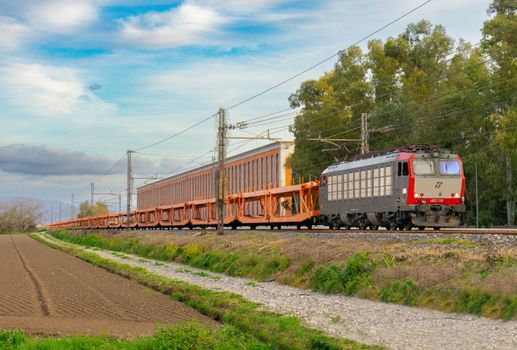
Cargo train on a railway cutting through rural Caserta, Italy, amidst lush greenery and open fields. Photo: Pasquale Ferraro / Pexels
Italy, a land of ancient ruins, Renaissance art, stunning coastlines, and delectable cuisine, beckons millions of travelers each year. For those planning a trip from the US, a crucial decision arises: how best to get around? The choice between car rental Italy and public transport is not merely a matter of preference but deeply impacts your itinerary, budget, and overall experience. Each option presents a unique set of advantages and challenges, and understanding these nuances is key to a seamless Italian adventure. Car rental offers unparalleled freedom and flexibility. Imagine spontaneously deciding to detour to a charming hilltop village not serviced by public transport, or stopping at a roadside vineyard for an impromptu wine tasting. With a rental car, you control your schedule entirely, allowing for exploration off the beaten path and carrying luggage with ease. This independence is particularly appealing for travelers aiming to explore rural regions like Tuscany's rolling hills, Puglia's trulli villages, or the Dolomites' majestic peaks. However, this freedom comes with responsibilities. Driving in Italy requires familiarity with local traffic laws, including the notorious ZTLs (Zona a Traffico Limitato or Limited Traffic Zones) that restrict vehicle access in historic city centers. These zones are ubiquitous in popular tourist cities like Rome, Florence, Bologna, and Siena, and unauthorized entry can lead to hefty fines, often received months after your trip. Parking can also be a significant challenge and expense, especially in cities. Fuel costs are higher than in the US, and tolls on Italy's extensive autostrade (motorways) can add up quickly. Furthermore, navigating narrow, winding roads, often shared with scooters and pedestrians, demands a confident and attentive driver. On the other hand, Italy's public transport system is extensive, efficient, and generally very reliable, particularly its rail network. High-speed trains (Frecciarossa, Italo) connect major cities like Rome, Florence, Milan, Venice, and Naples in a matter of hours, offering a comfortable, stress-free journey with stunning views. Regional trains and buses fill in the gaps, linking smaller towns and villages, though with varying frequencies. Opting for public transport eliminates the worries of navigation, parking, ZTLs, and fuel costs. It allows travelers to relax, enjoy the scenery, and even catch up on reading or work. For city-to-city travel, public transport is often the most sensible and eco-friendly choice. Within cities, local buses, trams, and metro systems provide excellent coverage, though they can be crowded during peak hours. The primary drawback of public transport is the reduced flexibility; you are bound by schedules and routes, which can limit spontaneous detours or access to very remote areas. Carrying heavy luggage on trains and buses can also be cumbersome, especially during transfers. Ultimately, the best approach for your Italian journey might involve a hybrid strategy. For example, using high-speed trains to travel between major cities and then renting a car for a few days to explore a specific rural region. This allows you to enjoy the benefits of both worlds: the efficiency of trains for long distances and the flexibility of a car for local exploration. Understanding your itinerary, budget, and comfort level with driving abroad will guide you toward the most appropriate transportation choices for your unforgettable Italian adventure. This detailed examination will equip you with the knowledge to make informed decisions for your trip.

Deep Dive into Car Rental in Italy: Pros, Cons, and Crucial Tips

Renting a car in Italy can transform your travel experience, offering unparalleled freedom to explore hidden gems and scenic routes at your own pace. However, it's essential to be well-informed to avoid potential pitfalls. The primary advantage, as mentioned, is flexibility. Imagine driving through Tuscany, stopping at a medieval village like San Gimignano, then veering off to a family-run vineyard for a tasting, all without adhering to a bus schedule. This spontaneity is priceless for many travelers, particularly those interested in agriturismo stays, rural exploration, or visiting multiple smaller towns that are poorly connected by public transport. A car also simplifies luggage management, allowing you to carry more and avoid the hassle of lugging suitcases through train stations. However, the challenges of car rental in Italy are significant and should not be underestimated. The most notorious are the ZTLs (Zona a Traffico Limitato). These are restricted traffic zones, typically in historic city centers, designed to preserve ancient areas and reduce pollution. They are heavily monitored by cameras, and unauthorized entry results in hefty fines, often delivered to your home address months later by the rental company, with an added administrative fee. Always look for ZTL signs and understand that GPS systems may not always alert you in time. Parking is another major hurdle; finding available and affordable parking in Italian cities can be a nightmare. Street parking is often scarce and regulated by colored lines: white for free (rare), blue for paid, and yellow for residents only. Parking garages are an option but can be expensive. Another crucial aspect is the International Driving Permit (IDP). If you are a non-EU citizen, an IDP is legally required alongside your valid US driver's license. You can obtain one easily from AAA or AATA in the US before your trip. Failure to carry an IDP can result in fines and issues with insurance in case of an accident. When booking your rental car, consider a smaller vehicle. Italian roads, especially in older towns, are notoriously narrow, and smaller cars are easier to maneuver and park. Manual transmission is also more common and often cheaper than automatics, so ensure you specify your preference. Be prepared for tolls on the autostrade; Italy has an excellent highway system, but you pay for it. Keep cash or a credit card ready, or consider renting a car with a Telepass device for automatic payment. Fuel costs are significantly higher than in the US, so factor this into your budget. Lastly, familiarize yourself with Italian road signs and driving etiquette. Italians can be assertive drivers, and roundabouts are prevalent. Understanding basic signs and right-of-way rules will boost your confidence and safety on the road. Always ensure you have comprehensive insurance coverage, ideally including collision damage waiver (CDW) and theft protection, often included in basic rental packages but always worth double-checking. Some credit cards offer rental car insurance benefits, so investigate those before purchasing additional coverage.

For more options, check out Noleggio auto in Italia.

Embracing Public Transport in Italy: Trains, Buses, and Urban Networks

For many travelers, embracing Italy's public transport network is not just a practical choice but an integral part of the authentic travel experience. It allows you to relax, observe local life, and avoid the stresses of driving, parking, and navigating. Italy boasts one of Europe's most comprehensive and efficient public transportation systems, with trains taking center stage for inter-city travel. The high-speed rail network, operated primarily by Trenitalia (with its Frecciarossa, Frecciargento, and Frecciabianca trains) and the private company Italo, connects major Italian cities with remarkable speed and comfort. Travel between Rome and Florence, for instance, can take as little as 1.5 hours, allowing for day trips or quick transitions between destinations. These trains offer various classes, from standard to executive, with amenities like Wi-Fi, power outlets, and refreshment services. Booking high-speed train tickets in advance, especially for popular routes and during peak season, is highly recommended to secure better prices and ensure availability. You can purchase tickets online via their respective websites or at train stations. Beyond high-speed services, regional trains (Regionale, Regionale Veloce) connect smaller towns and provide a more localized experience. While slower, they are considerably cheaper and offer a glimpse into everyday Italian life. These tickets typically don't require advance booking and can be purchased at station kiosks or ticket machines. Remember to validate your regional train ticket before boarding by stamping it in the green or yellow machines on the platform; failure to do so can result in fines. Buses play a crucial role in connecting areas not serviced by trains, particularly in rural regions, mountainous areas, and within cities. Each region and often individual city will have its own bus companies (e.g., ATAC in Rome, ACTV in Venice, ATAF in Florence). For longer-distance bus travel between cities, companies like FlixBus operate extensive networks and can be a more budget-friendly alternative to trains, though typically slower. Within cities, buses, trams, and metro systems (found in larger cities like Rome, Milan, and Naples) provide excellent coverage for urban exploration. Tickets for urban transport are usually purchased at tabacchi (tobacco shops), newsstands, or automatic machines and must be validated upon boarding. Consider purchasing multi-day passes if you plan extensive use of public transport within a city. One of the significant advantages of public transport is the cost-effectiveness, especially when compared to the combined costs of car rental, fuel, tolls, and parking. It also allows you to fully immerse yourself in the journey, enjoying the scenery without the distraction of driving. For eco-conscious travelers, public transport is a greener choice, reducing your carbon footprint. While public transport offers less spontaneity than a car, well-planned itineraries can leverage its efficiency to cover significant ground. For example, using a high-speed train to reach Florence, then relying on local buses or regional trains for day trips to nearby towns like Siena or Pisa, offers a balanced approach. Don't forget that Venice, being a car-free city, relies entirely on walking and vaporetti (water buses) for transport, making public transport the only viable option there. For more specific advice on navigating Venice, check out our guide on Venice travel essentials. Always keep an eye on your belongings, especially in crowded areas, and be aware of pickpockets, a minor but present concern in any popular tourist destination.

Essential Tips for a Smooth Italian Journey: Combining Car and Public Transport

To truly maximize your Italian adventure, consider a strategic blend of car rental and public transport. This hybrid approach often provides the best of both worlds, offering the efficiency of trains for long hauls and the flexibility of a car for localized exploration. Here are some essential tips to help you navigate this decision and ensure a smooth, enjoyable trip: * **Plan Your Itinerary Strategically:** If your trip involves primarily visiting major cities (Rome, Florence, Venice, Milan), public transport, especially high-speed trains, is almost always the superior choice. These cities are well-connected by rail, and driving within them is often a nightmare due to ZTLs, parking scarcity, and dense traffic. However, if your itinerary includes exploring rural areas like Tuscany, Puglia, the Dolomites, or the Amalfi Coast (outside of the main towns), a car becomes incredibly advantageous. Consider taking a train to a central hub (e.g., Florence for Tuscany, Naples for Amalfi Coast) and then renting a car there for a few days. * **Book in Advance for Savings:** This applies to both car rentals and high-speed train tickets. Booking your rental car several months ahead can secure better rates, especially if you need an automatic transmission. Similarly, train tickets purchased weeks or months in advance can be significantly cheaper than last-minute fares, often with 'Super Economy' or 'Economy' options on Trenitalia and Italo. * **Understand ZTLs and Parking:** This cannot be stressed enough. Before driving into any Italian city, research its ZTLs. Many hotels in ZTLs can register your car for temporary access, but always confirm this directly with them. Use parking apps (like EasyPark) or look for 'Parcheggio' signs for official parking garages outside city centers. Parking fines are a common and unwelcome souvenir. * **International Driving Permit (IDP) is Non-Negotiable:** For US citizens, an IDP is a legal requirement. Get one from AAA or AATA before you leave. It's inexpensive and quick to obtain, and it's your official translation of your US license into multiple languages, recognized by Italian authorities. * **Consider a Smaller Car:** Italian roads, especially in historic towns and rural areas, are often narrow and winding. A compact car will make driving and parking infinitely easier and less stressful. Most rental cars in Italy are manual transmission; if you require an automatic, book well in advance and expect to pay a premium. * **Factor in All Costs:** When comparing car rental vs. public transport, remember to account for all car-related expenses: rental fees, insurance, fuel (expensive in Italy), tolls on autostrade, and parking fees. For public transport, factor in the cost of individual tickets or multi-day passes. Often, public transport is more budget-friendly for city-to-city travel. * **Utilize Apps and Online Resources:** For trains, download the Trenitalia and Italo apps for easy booking, schedule checking, and ticket management. For local buses and city transport, research the specific city's transport authority app. Google Maps is generally reliable for navigation, but always double-check ZTL boundaries. * **Pack Smart:** If relying heavily on public transport, pack light. Maneuvering large suitcases through train stations and onto crowded buses can be challenging. A backpack or a smaller carry-on suitcase is ideal. By carefully considering these tips, you can craft a transportation strategy that enhances your Italian journey, allowing you to experience the country's diverse landscapes and vibrant culture with ease and enjoyment. Whether you're cruising through the Tuscan countryside or zipping between ancient cities, a well-planned approach to car rental Italy and public transport will be your key to an unforgettable trip.

Comparison

FeatureCar RentalHigh-Speed TrainsLocal Buses/Regional Trains
Flexibility & SpontaneityHigh (explore off-grid)Low (fixed schedules)Medium (some flexibility)
Cost (Inter-city)High (rental, fuel, tolls, parking)Medium (book in advance for savings)Low (budget-friendly)
Travel Time (Major Cities)Variable (traffic, ZTLs)Fast & EfficientSlow & Indirect
Luggage ConvenienceHigh (ample space)Medium (manageable)Low (can be cumbersome)
Access to Rural Areas✓ (limited routes)
Ease of NavigationChallenges (ZTLs, narrow roads)✓ (maps/apps helpful)

What Readers Say

"We used a combination of car rental Italy and public transport for our two-week trip. Trains were fantastic for getting between Rome and Florence, and then we rented a car to explore Tuscany for a few days. It was the perfect balance of efficiency and freedom!"

Sarah J. · Seattle, WA

"Public transport in Italy is surprisingly easy to use. We relied solely on trains and buses for our entire trip, and it saved us so much money and stress compared to dealing with a rental car. Highly recommend for city-focused travel."

Mark P. · Boston, MA

"Getting an International Driving Permit was a breeze, and it made renting a car in Italy hassle-free. We spent a week driving through Puglia, discovering amazing coastal towns that public transport wouldn't have reached. Absolutely worth it for rural exploration."

Emily R. · Austin, TX

"The ZTLs were a bit confusing at first, and we did get one parking ticket, but overall, having a rental car allowed us to see so much more of Sicily than we would have otherwise. Just be prepared for the driving challenges."

David L. · Chicago, IL

"As a solo traveler, I found public transport in Italy incredibly safe and convenient. I used trains to hop between cities and local buses for day trips. It was a budget-friendly way to see a lot without the added stress of driving in a foreign country."

Jessica M. · Denver, CO

Frequently Asked Questions

Do I need an International Driving Permit (IDP) to rent a car in Italy?

Yes, if you are a non-EU citizen, an International Driving Permit (IDP) is legally required in Italy alongside your valid national driver's license. You can obtain an IDP from AAA or AATA in the US before your trip. Failure to carry one can result in fines and potential issues with insurance in case of an accident, so it's a non-negotiable item for drivers.

What are ZTLs, and how can I avoid fines when driving in Italy?

ZTLs (Zona a Traffico Limitato) are Limited Traffic Zones in historic city centers where vehicle access is restricted. They are monitored by cameras, and unauthorized entry results in fines. To avoid fines, always look for ZTL signs (a white circle with a red border) and avoid driving into these areas unless your hotel has registered your license plate for temporary access. Park outside the ZTL and walk or use local public transport.

How do I buy train tickets in Italy, and should I book in advance?

You can buy train tickets online via the Trenitalia or Italo websites/apps, or at train stations from ticket machines or counters. For high-speed trains (Frecciarossa, Italo), booking several weeks or months in advance is highly recommended to get cheaper 'Super Economy' or 'Economy' fares. Regional train tickets can usually be bought on the day of travel, but remember to validate them in the machines on the platform before boarding.

Is it cheaper to rent a car or use public transport in Italy?

For city-to-city travel, public transport (especially trains) is generally cheaper than renting a car when considering all costs: rental fees, insurance, high fuel prices, tolls on motorways, and parking fees. However, for exploring remote rural areas or multiple small towns not well-served by trains, a car might be more cost-effective for the flexibility it offers, despite the higher per-day expenses.

Is driving in Italy difficult for Americans?

Driving in Italy can be challenging due to narrow roads, aggressive drivers, prevalent ZTLs, and difficult parking. However, with preparation (getting an IDP, understanding road signs, researching ZTLs), a confident driver can manage. It's often recommended to rent a smaller car and practice defensive driving. Many travelers opt for a hybrid approach, using trains for major cities and a car for rural exploration.

Who should consider car rental Italy and public transport for their trip?

Travelers with diverse itineraries that include both major cities and rural, off-the-beaten-path regions should strongly consider a combination of car rental and public transport. This strategy allows you to efficiently navigate between major hubs via train, while enjoying the freedom and flexibility of a car for exploring specific scenic routes, small villages, or countryside attractions that are less accessible by public transit.

Are Italian roads safe, and what about tolls?

Italian roads are generally safe, especially the well-maintained autostrade (motorways). However, rural roads can be narrow and winding. Tolls are common on autostrade and can add up; you can pay with cash, credit card, or Telepass. Always drive defensively, adhere to speed limits, and be aware of scooters and pedestrians, especially in urban and historic areas.

What are the future trends for transportation in Italy for tourists?

Future trends in Italian transportation are likely to focus on sustainability and enhanced digital integration. We can expect more electric vehicle rental options, further expansion of high-speed rail networks, and increasingly sophisticated apps for seamless multi-modal journey planning and ticketing. There may also be stricter enforcement or expansion of environmental zones in cities, encouraging greater reliance on public and shared transport options.

Armed with this comprehensive guide, you're ready to make informed decisions about car rental Italy and public transport. Plan your perfect Italian adventure, blending the freedom of the open road with the efficiency of its rail network, and embark on a journey filled with unforgettable experiences.

Topics: car rental Italy and public transportdriving in ItalyItaly travel tipsItalian public transportationrenting a car in Italy
Leo List
Brampton weed
Adultwork