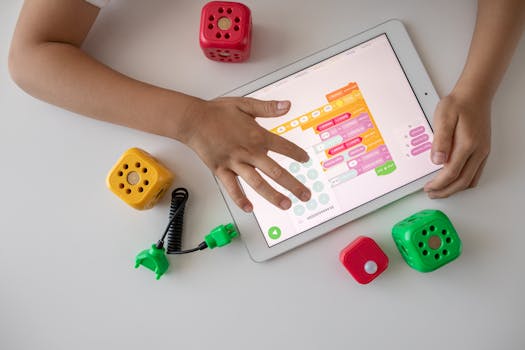
Unlock Learning: Best Educational Apps for Kids
best educational apps for kids

Unlock Learning: Best Educational Apps for Kids

Transform screen time into enriching educational adventures with our top picks for children's learning apps.

Find Your Child's App

Key Takeaways

  • ✓ Over 80% of parents believe educational apps improve their child's learning.
  • ✓ Interactive apps can increase engagement by up to 50% compared to traditional methods.
  • ✓ Early exposure to educational technology can enhance problem-solving skills.
  • ✓ Many top educational apps align with national curriculum standards like Common Core.

How It Works

1
Identify Learning Goals

Determine what subjects or skills your child needs to develop, whether it's reading, math, coding, or creativity. This helps narrow down the vast selection of available apps.

2
Research & Select Apps

Explore reputable sources, read reviews, and consider age-appropriateness and educational content. Look for apps that offer a balance of fun and learning.

3
Trial & Monitor Progress

Many apps offer free trials; utilize these to see how your child engages. Regularly monitor their progress and adjust app choices as their needs evolve.

4
Integrate into Routine

Incorporate app usage into a balanced daily routine, ensuring it complements other learning activities. Discuss their experiences and learning with them to reinforce concepts.

Navigating the Digital Classroom: Why Educational Apps Matter

In today's rapidly evolving digital landscape, screen time has become an undeniable part of children's lives. While concerns about excessive digital consumption are valid, the rise of high-quality educational apps presents a unique opportunity to transform passive entertainment into active, engaging learning experiences. These aren't just games; they are meticulously designed platforms that leverage interactive elements, gamification, and adaptive learning technologies to cater to individual learning styles and paces. The sheer volume of educational content available at our fingertips means that children can explore subjects far beyond the traditional classroom curriculum, fostering a deeper curiosity and a lifelong love for learning. From developing foundational literacy and numeracy skills to introducing complex concepts like coding, foreign languages, and scientific principles, the best educational apps for kids offer a personalized learning journey. They bridge gaps, reinforce classroom lessons, and even provide advanced challenges for gifted learners, all within a captivating digital environment. One of the most significant advantages of educational apps is their ability to make learning fun. Traditional methods can sometimes feel monotonous, but apps often incorporate vibrant graphics, engaging characters, rewards systems, and interactive puzzles that keep children motivated. This gamified approach helps children develop problem-solving skills, critical thinking, and even emotional intelligence through scenarios and challenges. Moreover, many apps offer real-time feedback, allowing children to understand their mistakes immediately and learn from them, a feature often difficult to replicate in a large classroom setting. Parents can also benefit immensely, as many apps provide progress reports and insights into their child's learning patterns, helping them identify areas where their child excels or needs additional support. This data-driven approach empowers parents to become more active participants in their child's educational journey, making informed decisions about their learning resources. The accessibility of these tools also democratizes education, offering high-quality learning materials to children regardless of their geographical location or access to traditional educational resources. It's about harnessing technology to empower the next generation, preparing them not just for academic success but for a future where digital literacy is paramount.

Top Picks for Foundational Skills: Reading, Writing, and Math

Building a strong foundation in reading, writing, and mathematics is crucial for a child's academic success. Fortunately, a plethora of outstanding educational apps are specifically designed to make these core subjects engaging and accessible. For early literacy, apps like 'Hooked on Phonics' or 'Reading Eggs' stand out. 'Hooked on Phonics' utilizes a systematic, multi-sensory approach to teach phonics, blending, and sight words through interactive games and songs, making the often-challenging process of learning to read feel like play. 'Reading Eggs' offers a comprehensive online reading program that combines animated lessons, interactive activities, and e-books, catering to children from pre-kindergarten to second grade. These apps often feature adaptive learning paths, meaning they adjust the difficulty level based on the child's performance, ensuring they are always challenged but not overwhelmed. The immediate positive reinforcement, often in the form of virtual rewards or unlocking new levels, keeps children motivated to continue their learning journey. When it comes to mathematics, apps like 'Prodigy Math Game' and 'Math Blaster' have revolutionized how children perceive numbers. 'Prodigy' transforms math practice into an immersive fantasy role-playing game where children solve curriculum-aligned math problems to cast spells and battle monsters. This innovative approach makes math practice less of a chore and more of an adventure, covering topics from basic arithmetic to pre-algebra. 'Math Blaster' offers a fast-paced, arcade-style experience that hones math skills through engaging missions and challenges. These apps don't just drill facts; they encourage logical reasoning, problem-solving, and strategic thinking, all while adhering to national educational standards. For writing and language arts, apps like 'Epic!' provide access to a vast library of digital books, fostering a love for reading and improving comprehension. While not solely a writing app, regular exposure to diverse texts through 'Epic!' naturally enhances vocabulary and understanding of sentence structure, which are precursors to strong writing skills. Other apps specifically focus on handwriting practice, grammar, and creative writing prompts, often incorporating tracing exercises, interactive stories, and sentence-building games. The visual and auditory feedback provided by these apps is invaluable, helping children correct their mistakes in real-time and internalize correct usage. By integrating these apps into a child's learning routine, parents can ensure a robust and enjoyable development of essential academic skills, setting them up for long-term success.

Beyond the Basics: Exploring STEM, Creativity, and Life Skills

The realm of educational apps extends far beyond the traditional three R's, offering incredible opportunities for children to delve into STEM (Science, Technology, Engineering, and Mathematics), unleash their creativity, and even develop crucial life skills. For budding scientists and engineers, apps like 'Tynker' and 'ScratchJr' are game-changers. 'Tynker' introduces children to the fundamentals of coding through fun, block-based programming puzzles and projects, allowing them to create their own games, apps, and even control robots. It demystifies complex computational thinking and encourages logical sequencing and problem-solving from an early age. Similarly, 'ScratchJr,' developed by MIT, provides a simplified visual programming language that enables young children (ages 5-7) to create interactive stories and games, fostering creativity and logical reasoning without requiring reading skills. These apps are not just about learning to code; they are about teaching children how to think systematically and approach challenges with a structured mindset, skills that are invaluable in any field. Creativity and artistic expression are equally vital for a child's holistic development, and numerous apps excel in this area. 'Drawing Desk' offers a versatile digital canvas with various tools, brushes, and colors, allowing children to experiment with art in a mess-free environment. Apps like 'GarageBand' (for iOS) or 'Simply Piano' can introduce children to music creation and instrument learning, making what might seem daunting accessible and enjoyable. These creative apps don't just entertain; they help children develop fine motor skills, color recognition, spatial awareness, and a deeper appreciation for the arts. Furthermore, they provide an outlet for self-expression, which is crucial for emotional development and building confidence. Beyond academic subjects, there are also apps designed to teach important life skills. Apps focused on mindfulness and meditation, like 'Calm Kids' or 'Headspace for Kids,' can help children manage emotions, reduce anxiety, and improve focus. Financial literacy apps introduce concepts of saving, spending, and budgeting in an age-appropriate manner. Even apps that simulate real-world tasks, like cooking or gardening, can teach practical skills and foster responsibility. The beauty of these diverse apps is their ability to cater to every child's unique interests and learning styles, making the journey of discovery an exciting and empowering one. By providing access to these specialized tools, parents can help their children explore passions, develop new talents, and build a well-rounded skill set that will serve them well in school and beyond. Educational technology is constantly evolving, offering new avenues for comprehensive development.

Choosing Wisely: Tips for Selecting and Using Educational Apps Effectively

With thousands of educational apps available, selecting the right ones for your child can feel overwhelming. Here are some crucial tips to ensure you make informed decisions and maximize the benefits of digital learning: * **Prioritize Educational Value Over Entertainment:** While engaging graphics are great, the core content must be truly educational. Look for apps that align with learning objectives, offer progressive challenges, and provide substantive feedback. Read reviews from other parents and educators, and check if the app has received endorsements from reputable educational organizations. * **Check for Age Appropriateness:** Apps are often categorized by age, but it's essential to verify if the content, complexity, and user interface are suitable for your child's developmental stage. An app too easy will bore them, and one too hard will frustrate them. * **Beware of In-App Purchases and Ads:** Many 'free' apps come with constant prompts for in-app purchases or intrusive advertisements. These can disrupt the learning experience and potentially expose children to inappropriate content. Opt for paid apps with no ads or subscriptions that offer a complete, ad-free experience. * **Review Privacy Policies:** Children's online privacy is paramount. Always read the app's privacy policy to understand what data is collected, how it's used, and if it complies with regulations like COPPA (Children's Online Privacy Protection Act). Choose apps that prioritize user privacy and data security. * **Balance Screen Time with Other Activities:** Educational apps are powerful tools, but they should complement, not replace, other forms of learning and play. Encourage a healthy balance with outdoor activities, reading physical books, creative arts, and social interaction. Establish clear screen time limits and stick to them. * **Engage with Your Child:** Don't just hand over the tablet; sit with your child, play the apps together, and discuss what they are learning. This interaction reinforces concepts, strengthens your bond, and helps you monitor their engagement and understanding. It also provides an opportunity to model responsible technology use. * **Utilize Parent Dashboards:** Many premium educational apps offer parent dashboards or progress reports. Use these features to track your child's learning progress, identify areas of strength and weakness, and customize their learning path. This data can be invaluable for understanding their educational journey. * **Consider Offline Access:** For travel or areas with limited internet, apps that offer offline access can be incredibly useful, ensuring continuous learning without interruption. By following these guidelines, you can transform screen time into a powerful educational asset, nurturing your child's curiosity and fostering a lifelong love for learning in a safe and productive way.

Comparison

FeatureABCmouse (Ages 2-8)Prodigy Math (Grades 1-8)Duolingo Kids (Ages 7+)
Core SubjectComprehensive (Reading, Math, Art)Math FocusLanguage Learning
Learning StyleGuided, InteractiveGamified RPGGamified, Bite-sized
Curriculum Alignment✓ (Common Core)✓ (Common Core, TEKS, etc.)N/A (Language Acquisition)
Cost ModelSubscriptionFree (Optional Membership)Free (Optional Ad-Free)
Parent Controls✓ (Progress Tracking)✓ (Dashboard, Goals)✓ (Progress, Challenges)
Offline Access✓ (Limited)

What Readers Say

"ABCmouse has been a game-changer for my 4-year-old. She's learning to read and do basic math, and she genuinely looks forward to her 'ABC time.' It's incredible how much she's absorbed from these best educational apps for kids."

Sarah J. · Austin, TX

"My son used to dread math, but Prodigy Math has completely turned that around. He sees it as a game, and I see his math grades improving. It's truly one of the best educational apps for kids that makes learning fun."

David M. · Seattle, WA

"We started using Duolingo Kids for Spanish, and my daughter is picking up words so quickly! The bite-sized lessons are perfect, and she loves earning gems. We're even practicing together now thanks to these best educational apps for kids."

Emily P. · Miami, FL

"While some apps can be a bit pricey with subscriptions, the value from apps like Khan Academy Kids is undeniable. It's comprehensive and free, though sometimes my kids wish it had more 'game' elements. Still, a fantastic resource."

Mark T. · Denver, CO

"As a homeschooling parent, finding quality supplementary material is key. Tynker has been instrumental in teaching my kids coding logic in a way that's accessible and fun. It's definitely among the best educational apps for kids for STEM learning."

Jessica L. · Chicago, IL

Frequently Asked Questions

What are the most searched best educational apps for kids?

Among the most popular and highly-rated educational apps for kids are ABCmouse, Khan Academy Kids, Prodigy Math, Reading Eggs, and Duolingo Kids. These apps cover a wide range of subjects, from foundational literacy and numeracy to coding and foreign languages, catering to different age groups and learning styles. They are frequently searched due to their comprehensive curricula and engaging interfaces.

Are educational apps safe for my child's privacy?

Reputable educational apps prioritize child safety and privacy. Look for apps that explicitly state compliance with regulations like COPPA (Children's Online Privacy Protection Act) in the US. Always review the app's privacy policy to understand data collection practices. Many premium, subscription-based apps tend to have stronger privacy protections compared to free, ad-supported alternatives.

How do I choose the right educational app for my child?

Start by identifying your child's learning goals and interests. Research apps that align with these areas, checking age-appropriateness, educational content quality, and user reviews. Utilize free trials to see how your child engages with the app. Also, consider apps with parent dashboards for progress tracking and those that are ad-free to ensure an uninterrupted learning experience.

Are paid educational apps worth the cost compared to free ones?

Often, paid or subscription-based educational apps offer a more robust, ad-free, and comprehensive learning experience with enhanced features like progress tracking, adaptive learning paths, and dedicated customer support. While excellent free options exist (like Khan Academy Kids), paid apps frequently provide a higher level of content quality and a distraction-free environment, which can be a worthwhile investment for sustained learning.

How do educational apps compare to traditional learning methods?

Educational apps complement, rather than replace, traditional learning. They excel at providing interactive, personalized, and gamified experiences that can boost engagement, reinforce concepts, and offer immediate feedback. Traditional methods, however, are crucial for developing social skills, hands-on learning, and direct interaction with educators. The most effective approach often involves integrating both for a holistic learning experience.

Who should use best educational apps for kids?

Educational apps are beneficial for a wide range of children, from preschoolers learning foundational skills to elementary and middle schoolers exploring advanced subjects like coding or foreign languages. They are particularly useful for parents looking to supplement school learning, engage children during travel, or provide personalized instruction tailored to individual learning paces and styles.

Can educational apps lead to screen addiction or eye strain?

While educational apps offer many benefits, it's crucial to manage screen time to prevent potential issues like screen addiction or eye strain. Establish clear time limits, encourage breaks, ensure proper lighting, and enforce the '20-20-20 rule' (every 20 minutes, look at something 20 feet away for 20 seconds). Balancing app usage with other activities is key to healthy development.

What are the future trends in educational apps for kids?

Future trends in educational apps are moving towards more personalized, AI-driven adaptive learning paths that adjust content in real-time to a child's specific needs and pace. Expect greater integration of augmented reality (AR) and virtual reality (VR) for immersive learning experiences, enhanced collaboration features, and a stronger focus on socio-emotional learning and critical thinking skills beyond rote memorization.

Empower your child's learning journey by exploring the best educational apps for kids. Transform their screen time into a world of discovery, growth, and endless possibilities. Start finding the perfect app today and watch them thrive!

Topics: best educational apps for kidslearning apps for childrenkids education technologyapps for elementary learningdigital learning tools
Leo List
Brampton weed
Adultwork EstrelaBet Vai de Bet R7 Bet Betão Galera Bet Rainbet Bet9ja Shop SportyBet BetKing Sisal Loto Foot Hollywoodbets YesPlay Odibets RushBet Jugabet BetWarrior BetCity MSport betPawa Fortebet