
Affordable Online Universities for Undergraduates
affordable online universities for undergraduates

Affordable Online Universities for Undergraduates

Unlock quality education and career growth without the burden of high tuition costs. Your future starts here.

Find Your University

Key Takeaways

  • ✓ Average online bachelor's degree costs between $30,000 and $60,000.
  • ✓ Many affordable online programs offer in-state tuition rates regardless of residence.
  • ✓ Financial aid, scholarships, and employer tuition assistance can further reduce costs.
  • ✓ Accreditation is crucial for transferability of credits and employer recognition.

How It Works

1
Research & Compare Programs

Identify universities offering your desired major within a budget-friendly framework. Look at tuition, fees, and program length to get a full cost picture.

2
Verify Accreditation & Quality

Ensure the institution and program are regionally or nationally accredited. This guarantees the degree holds value and is recognized by employers and other academic institutions.

3
Explore Financial Aid Options

Complete the FAFSA and apply for federal grants, loans, and institutional scholarships. Many online universities have specific aid for distance learners.

4
Apply & Enroll

Submit your application, transcripts, and any required essays. Once accepted, follow enrollment steps, including orientation and course registration, to begin your academic journey.

Navigating the Landscape of Affordable Online Education

Focused woman typing on laptop, surrounded by books in a cozy study spot. Photo: Yan Krukau / Pexels
The dream of a college degree often comes with the daunting reality of tuition costs. For many aspiring undergraduates in the US, the price tag associated with traditional on-campus education can be a significant barrier. However, the rise of online learning has revolutionized access to higher education, making it more flexible and, crucially, more affordable. This comprehensive guide is designed to help you navigate the landscape of affordable online universities for undergraduates, ensuring you can achieve your academic goals without accumulating crippling debt. We'll delve into what makes an online university 'affordable,' how to identify legitimate programs, and what factors to consider beyond just the sticker price. Affordability in online education isn't just about the lowest tuition per credit hour. It encompasses a broader range of factors, including the cost of textbooks and materials, technology fees, and the potential savings on living expenses, commuting, and childcare that often come with studying remotely. Many online universities, particularly public institutions, offer in-state tuition rates to all online students, regardless of their physical location, significantly reducing the financial burden. Furthermore, the flexibility of online programs often allows students to continue working full-time or part-time, providing an income stream that can directly offset educational costs. This capability to earn while learning is a game-changer for many, preventing the need to take on excessive student loans. Understanding the true cost of an online degree requires a holistic view, considering not just tuition but all associated expenses and potential savings. One of the primary advantages of pursuing an undergraduate degree online is the sheer accessibility it offers. Students from rural areas, those with family obligations, active military personnel, and working professionals can all pursue higher education without geographical or time constraints. This flexibility is often paired with diverse program offerings, from business and technology to healthcare and humanities, ensuring that students can find a path that aligns with their career aspirations. The key is to find institutions that balance this accessibility and program diversity with a commitment to affordability and academic quality. As you embark on this journey, remember that a degree from a reputable online institution can open doors to new career opportunities, increased earning potential, and personal growth, all while managing your financial commitments effectively. We'll explore specific strategies for finding these institutions and making the most of your online learning experience. For more insights into higher education paths, consider exploring different types of educational institutions.

Key Factors for Identifying Low-Cost Online Colleges

Students engaged in learning mathematics using calculators in a classroom setting. Photo: www.kaboompics.com / Pexels
When searching for affordable online universities for undergraduates, it's essential to look beyond the initial tuition rate. Several key factors contribute to the overall cost-effectiveness of an online program. Firstly, always prioritize accredited institutions. Regional accreditation is the gold standard, ensuring that your degree will be recognized by employers and other academic institutions for graduate studies or transfer credits. While national accreditation exists, it's generally less accepted for transfer purposes. Unaccredited programs, no matter how cheap, are often worthless in the job market, making accreditation a non-negotiable criterion. Secondly, compare tuition rates carefully. Some universities charge a flat per-credit hour rate for all students, while others offer significantly lower rates for in-state residents. However, many public online programs extend in-state tuition to all distance learners, regardless of their physical residency, which can lead to substantial savings. Be sure to inquire about specific online student tuition policies. Also, look for institutions with transparent fee structures. Hidden fees for technology, course materials, or graduation can quickly add up, so request a detailed breakdown of all potential costs before applying. Some programs include digital textbooks or resources in their tuition, while others require separate purchases, which can be a significant expense. Thirdly, consider the total program length and credit requirements. A program with fewer required credits or one that allows for accelerated completion can naturally be more affordable. Look for institutions that accept transfer credits from previous college coursework or offer competency-based education (CBE) models. CBE allows students to earn credits by demonstrating mastery of subjects they already know, potentially speeding up degree completion and reducing overall costs. This is particularly beneficial for adult learners with prior work experience or self-taught skills. Finally, investigate financial aid opportunities specifically for online students. Many universities have dedicated scholarships or grants for distance learners. Don't forget to complete the Free Application for Federal Student Aid (FAFSA) to determine your eligibility for federal grants, work-study programs, and low-interest federal loans. Some employers also offer tuition reimbursement programs, so check with your current or prospective employer. By meticulously evaluating these factors, you can make an informed decision that aligns with both your academic aspirations and your financial constraints, ensuring you invest wisely in your future.

Top Contenders: Examples of Budget-Friendly Online Institutions
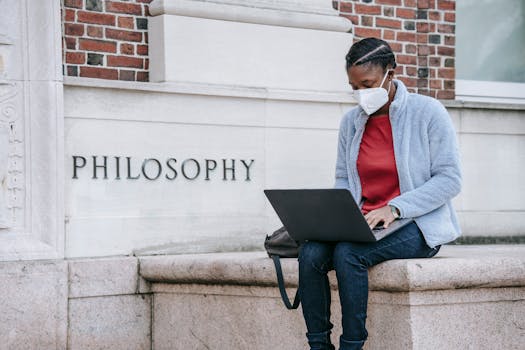
Concentrated young African American female student in casual clothes and medical mask sitting near Philosophy faculty and typing on laptop Photo: Charlotte May / Pexels
The landscape of affordable online universities for undergraduates is rich with options, but identifying the best fit requires careful consideration. Several institutions consistently rank high for their combination of affordability, academic quality, and robust online programming. Public universities, especially those with large online divisions, often lead the pack. For instance, institutions within the state university systems, such as the University of Florida Online, Arizona State University Online, and the University of Central Florida Online, frequently offer competitive tuition rates. These universities leverage their public funding and established academic infrastructure to provide high-quality online degrees that are often comparable in cost to or even cheaper than their on-campus counterparts, particularly when considering the elimination of housing and commuting expenses. Another category of budget-friendly institutions includes state-specific online colleges or consortia. Western Governors University (WGU) is a prime example, known for its competency-based education model. WGU charges tuition per six-month term, not per credit, allowing highly motivated students to complete multiple courses and accelerate their degree path, thereby significantly reducing overall costs. This model is particularly attractive to self-starters and those with prior knowledge or experience looking to fast-track their education. Similarly, institutions like the University of Maryland Global Campus (UMGC) and Thomas Edison State University specialize in adult learners and online education, often offering flexible programs and competitive tuition rates. Community colleges also play a crucial role in providing affordable entry points to higher education. Many community colleges offer fully online associate's degrees that can then be transferred to a four-year online university to complete a bachelor's degree. This '2+2' pathway is often the most cost-effective way to earn a bachelor's, as community college tuition is typically much lower than four-year universities. When considering this route, it's vital to ensure that the community college has articulation agreements with your target four-year online university to guarantee seamless credit transfer. Always consult with academic advisors at both institutions to plan your coursework effectively. When evaluating these options, pay close attention to the specific program you're interested in, as tuition can vary by major or college within the same university. Also, look for schools that have strong student support services for online learners, including academic advising, technical support, and career services. A supportive environment can significantly impact your success and overall experience. By researching these top contenders and understanding their unique offerings, you can strategically choose an online university that delivers both academic excellence and financial feasibility.

Maximizing Your Savings: Tips and Common Mistakes to Avoid

A red graduation cap with a congratulations card, symbolizing achievement and celebration. Photo: RDNE Stock project / Pexels
Embarking on an online undergraduate degree journey requires not only academic dedication but also financial savviness. Maximizing your savings means being proactive and informed. One of the most effective tips is to apply for every scholarship and grant for which you might be eligible. Don't limit yourself to institutional aid; explore external scholarships from foundations, professional organizations, and local community groups. Many scholarships go unclaimed simply because students don't apply. Utilize online scholarship search engines and be diligent in your applications. Secondly, consider purchasing used textbooks or renting them digitally. Textbook costs can be exorbitant, but many online platforms offer cheaper alternatives or even free open educational resources (OERs) as part of the course material. Always check if your university provides access to digital libraries or OERs before buying new books. Another crucial tip is to avoid unnecessary fees. Understand the drop/add deadlines for courses to prevent charges for classes you don't intend to take. Be mindful of technology fees, graduation fees, and other administrative costs. If possible, complete your degree within the standard timeframe, as extending your studies can lead to additional tuition and fees. Leverage prior learning assessments (PLAs) or credit for prior learning (CPL) if your university offers them. If you have significant work experience or have completed professional certifications, you might be able to earn college credit without taking a course, saving both time and money. Common mistakes to avoid include falling for unaccredited 'diploma mills.' These institutions promise quick, cheap degrees but are worthless in the professional world. Always verify accreditation. Another mistake is taking on too much student loan debt without fully understanding the repayment terms. While loans can be necessary, prioritize grants and scholarships first, and only borrow what you absolutely need. Don't neglect the FAFSA, even if you think you won't qualify for aid; it's the gateway to most federal assistance. Finally, avoid procrastination. Falling behind in online courses can lead to failed classes, requiring you to retake them and incur additional costs. Stay organized, manage your time effectively, and utilize all available academic support services. By following these tips and avoiding common pitfalls, you can significantly reduce the financial burden of your online undergraduate degree.

Comparison

FeatureWestern Governors University (WGU)University of Florida OnlineUniversity of Maryland Global Campus (UMGC)
AccreditationRegional (NWCCU)Regional (SACSCOC)Regional (MSCHE)
Tuition ModelPer 6-month termPer credit hourPer credit hour
FlexibilityHigh (competency-based)Moderate (semester-based)High (8-week sessions)
Credit for Prior LearningLimited
Typical StudentSelf-motivated, experiencedTraditional/non-traditionalWorking adults, military

What Readers Say

"WGU was a lifesaver for me. As a single mom, the competency-based model allowed me to accelerate my degree, saving thousands compared to a traditional university. The flexibility was unmatched."

Sarah J. · Austin, TX

"The University of Florida Online offered a top-tier education at an incredibly reasonable price. I felt fully supported by advisors and the quality of instruction was excellent, leading to a great job offer."

David M. · Orlando, FL

"Thanks to UMGC, I earned my Bachelor's in Cybersecurity while working full-time. Their tuition assistance for military members made it truly affordable, and I immediately secured a promotion upon graduation."

Maria L. · Chicago, IL

"While the tuition at my online state university was affordable, the technology fees added up more than I anticipated. However, the quality of the program and the career services made it a worthwhile investment."

Kevin P. · Denver, CO

"Transferring my community college credits to an affordable online university made my bachelor's degree attainable. It was a smart financial move, and the transition was surprisingly smooth."

Jessica R. · Seattle, WA

Frequently Asked Questions

Are affordable online universities for undergraduates legitimate?

Yes, many affordable online universities are highly legitimate, regionally accredited institutions. The key is to verify their accreditation through recognized bodies like CHEA or the Department of Education. A legitimate online degree holds the same value as an on-campus degree from the same institution.

Will employers recognize an online degree from an affordable university?

Absolutely, as long as the university is regionally accredited. Employers primarily care about the accreditation of the institution and the relevance of your degree to the job. The 'online' modality is increasingly common and well-accepted, especially from reputable, affordable institutions.

How can I find scholarships specifically for online students?

Start by checking the financial aid pages of the universities you're considering; many have dedicated scholarships for online learners. Also, explore national scholarship databases, professional organizations related to your major, and local community foundations, as many do not differentiate between online and on-campus students.

Is it possible to complete an online bachelor's degree quickly and affordably?

Yes, especially through competency-based education (CBE) programs offered by institutions like Western Governors University. These programs allow you to progress at your own pace, potentially completing your degree faster and therefore more affordably by paying per term rather than per credit hour.

How do affordable online universities compare to community colleges for cost savings?

Community colleges are often the most affordable starting point for an undergraduate degree. Many students complete their first two years (associate's degree) at a community college online and then transfer those credits to an affordable four-year online university to complete their bachelor's. This '2+2' pathway is highly cost-effective.

Who should consider affordable online universities for undergraduates?

Affordable online universities are ideal for working professionals, parents, active military personnel, individuals in rural areas, and anyone seeking a flexible, cost-effective pathway to a bachelor's degree. They cater to those who need to balance education with other life commitments without compromising on quality or accumulating excessive debt.

What are the risks of choosing a very cheap, unaccredited online program?

The primary risk is that the degree will be worthless. Unaccredited programs are often not recognized by employers, graduate schools, or professional licensing boards. You'll spend time and money on a credential that has no academic or professional value, essentially wasting your investment.

What future trends might impact the affordability of online degrees?

Future trends include the expansion of open educational resources (OERs), increasing adoption of competency-based education, and potentially more government funding for online learning initiatives. As technology advances, online education is likely to become even more efficient, flexible, and potentially more affordable for a broader range of students.

Don't let cost be a barrier to your academic and career aspirations. Affordable online universities for undergraduates offer a legitimate, flexible, and high-quality path to earning your degree. Explore your options today and invest in a future where education is within reach.

Topics: affordable online universities for undergraduatescheap online degreeslow-cost online collegesonline bachelor's degreesonline education affordability
Leo List
Brampton weed
Adultwork